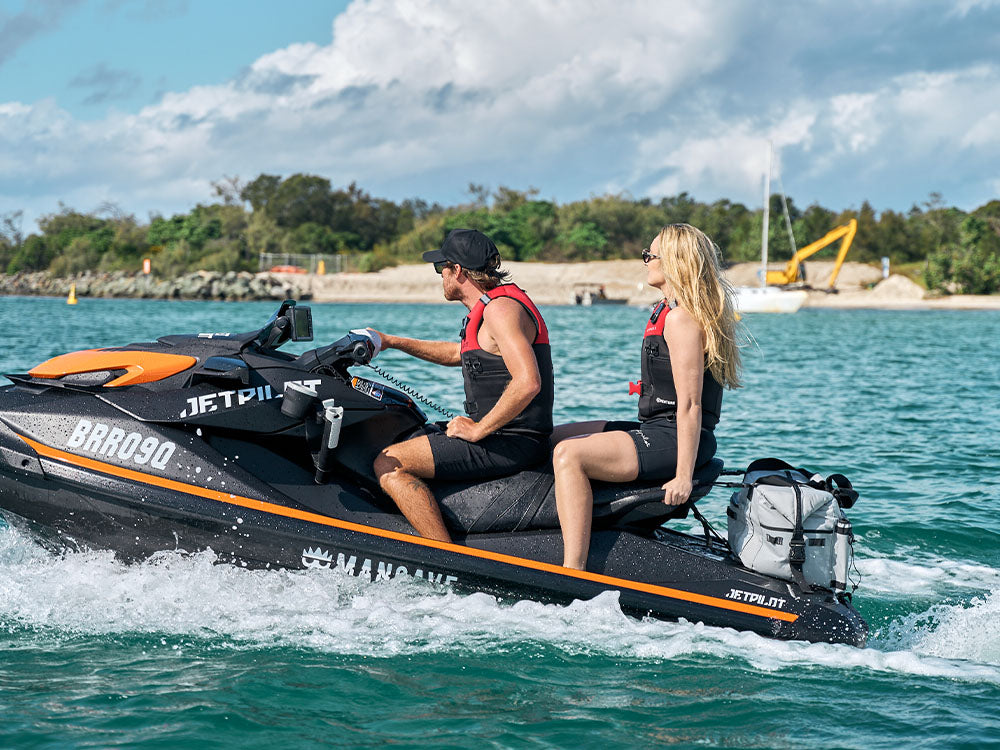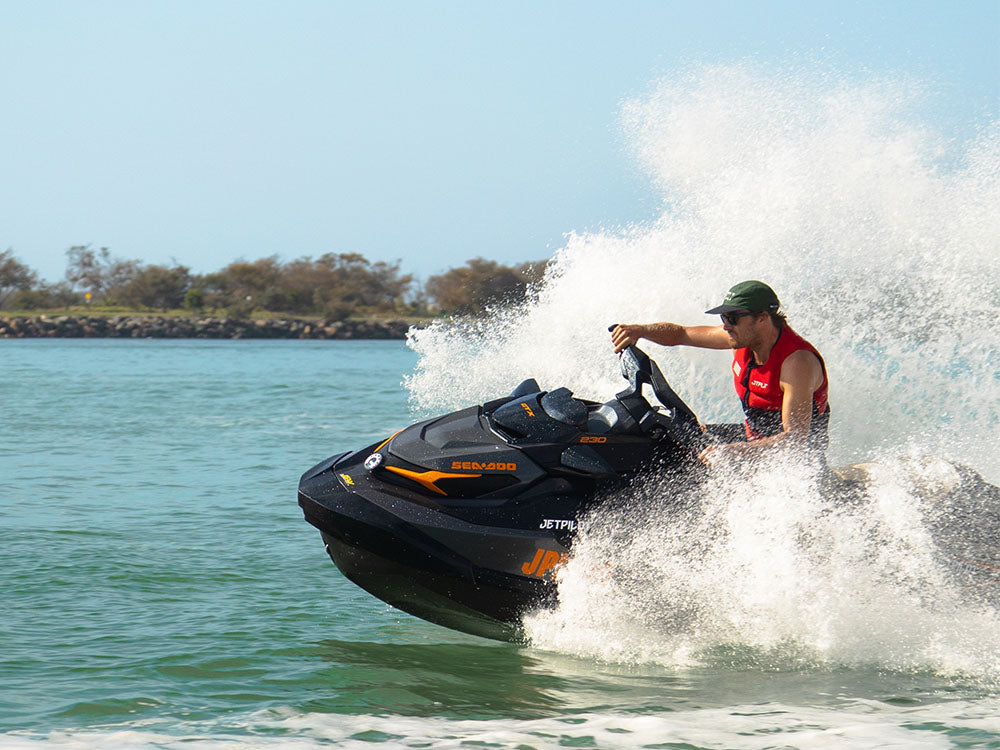




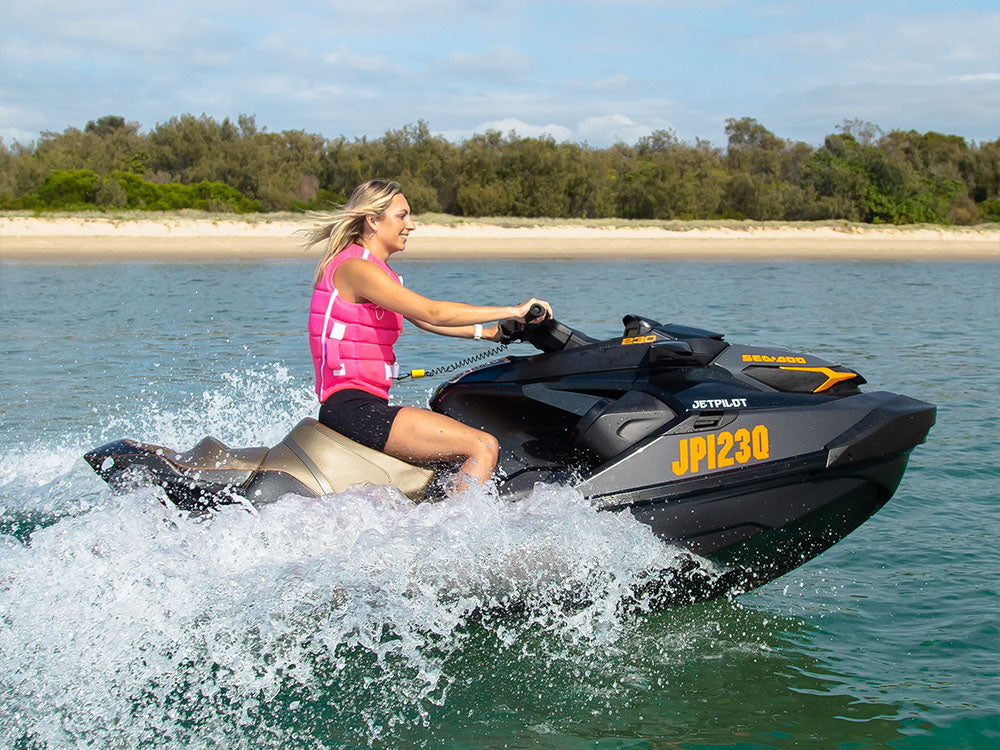
The short answerIn Australia, every person on a personal watercraft (PWC) must wear a lifejacket at all times — and everyone on a recreational vessel must wear one beyond 400 metres from shore (further in some states). The minimum standard is an AS 4758-certified Level 50S for PWCs. Fit matters as much as the label — a loose jacket is a dangerous jacket. Rules vary by state, age, vessel type and conditions, and this guide pulls the current rules straight from each maritime authority.
Why life jackets are non-negotiable on the water

Drowning is still the leading cause of death on Australia's waterways. Royal Life Saving Australia's national drowning reports consistently show that the majority of boating-related drownings involved people who were not wearing a lifejacket — even when one was on board (Royal Life Saving — National Drowning Reports).
A lifejacket is only safety equipment if it's on your body. Strapped, buckled, fitted — not stashed under a seat. Every state in Australia has written that reality into law, and the rules are stricter than most riders realise.
What counts as a lifejacket in Australia — AS 4758 explained

Australia classifies lifejackets (legally called Personal Flotation Devices, or PFDs) by the AS 4758 standard. The number after the level indicates the minimum buoyancy in newtons — bigger number, more buoyancy and better inversion recovery.
| Level | Buoyancy | Best for | Key features |
|---|---|---|---|
| Level 50S | ~50N | PWC, waterskiing, wakeboarding, tow-in sports | Close-fitting, high-impact rated, no collar. Must be bright colour for the "S" (special) rating. |
| Level 50 | ~50N | Sheltered waters, dinghies, kayaks | Similar buoyancy to 50S, broader colour rules. |
| Level 100 | 100N+ | Open/coastal waters, offshore passages | Turns most unconscious wearers face-up. Includes a collar. |
| Level 150 | 150N+ | Offshore, rough conditions | Higher buoyancy and reliable inversion recovery. |
| Level 275 | 275N+ | Commercial / extreme offshore | Designed for heavy clothing and adverse conditions. |
Look for the AS 4758 label stitched inside the jacket. If it's not there, it's not legal for use on Australian recreational vessels. Every Jetpilot Level 50S lifejacket carries the AS 4758 mark.
Inflatable vs foam — what's allowed where

Most states accept both inflatable and inherently-buoyant (foam) jackets, but there are two important limits:
- Inflatables are not acceptable for PWC use. Every state that licenses PWCs mandates an inherently-buoyant Level 50S — inflatable jackets are not rated for the impact forces of a jet ski fall.
- Inflatables require servicing. Manufacturers typically require annual inspection; gas cylinders must be full and hydrostatic indicators within date.
Fit — the part most riders get wrong

A correctly-sized jacket should:
- Sit snug against your torso with all zippers, buckles and straps fastened — not loose around the ribcage.
- Not ride up over your chin when someone lifts it by the shoulders (the "chin test"). If it does, size down or tighten the waist strap.
- Allow you to breathe and move comfortably — if it restricts your arms, it's too small.
- Be matched to the wearer's weight and chest size. Child jackets are sized by weight, not age.
Jetpilot's Cause and Venture life jackets use a segmented foam panel construction that moves with you — no gaping ribs, no riding up, no soft panels crushing in a crash. Fit is why we design our own.
State-by-state lifejacket rules

Every state and territory sets its own "when must you wear" rules for lifejackets. Here's the current picture, pulled directly from each maritime authority.
New South Wales

In NSW, a lifejacket must be worn — not just carried — in these situations (NSW Government — Lifejackets):
- At all times on a PWC (Level 50S minimum).
- On any vessel under 4.8m in "open waters" or "alpine waters".
- When boating alone on any vessel, or in adverse conditions.
- When crossing a coastal bar on any vessel under 4.8m.
- Children under 12 must wear one at all times on any vessel under 4.8m that's under way.
Victoria

Victoria requires lifejackets to be worn at all times by everyone on a PWC, and by all occupants on vessels under 4.8m while the vessel is under way (Safe Transport Victoria — Lifejackets). Children under 10 must wear a lifejacket at all times when under way on any recreational vessel.
Queensland

In Queensland, the declared ship rule applies: everyone on a PWC must wear a Level 50S lifejacket at all times (Maritime Safety Queensland — Lifejackets). Children under 12 must wear a lifejacket in any open boat under 4.8m that is under way. Level 100 or higher is required for smooth- or partially-smooth-water vessels without cabins.
Western Australia, South Australia, Tasmania, ACT & NT
The remaining states and territories follow similar patterns — PWC use always requires a Level 50S worn at all times, and children (usually under 12) must wear one when any open vessel is under way. For the full PWC-specific requirements, age thresholds and licensing overlap, read our companion guide:
Do I Need a PWC Licence in Australia? State-by-State Guide 2026
Care and servicing — keep your jacket legal

- Rinse after every use — especially after saltwater. Salt crystals abrade foam and degrade stitching.
- Drip dry out of direct sunlight — UV damages foam and polyester shell. Don't tumble dry.
- Inspect before every ride — check straps, buckles, seams and fabric for tears, abrasion or compression damage.
- Service inflatables annually — check cylinder weight, hydrostatic indicator, and replace re-arm kits as specified by the manufacturer.
- Replace when damaged — any significant rip, crushed foam section or sun-brittle fabric means retirement. A jacket that fails in a crash is no jacket at all.
Frequently asked questions
Do I have to wear a lifejacket on a jet ski in Australia?
Yes — in every state that licenses PWCs, every person on board must wear an AS 4758 Level 50S lifejacket from launch to retrieval, no matter how short the trip.
Does my child have to wear a lifejacket?
Yes. In most states, children under 10 or under 12 must wear a correctly-fitted lifejacket at all times when any open recreational vessel under 4.8m is under way. Check your state's specific age cutoff with its maritime authority.
Can I use an inflatable lifejacket on a jet ski?
No. Every Australian state requires an inherently-buoyant (foam) Level 50S for PWC use. Inflatables are not rated for the impact forces involved.
What is an AS 4758 lifejacket?
AS 4758 is the Australian Standard that classifies lifejackets by buoyancy and performance. The "Level" number indicates buoyancy in newtons — Level 50S for PWCs and tow sports, Level 100+ for open waters.
How do I know my lifejacket fits correctly?
With all buckles and straps fastened, the jacket should sit snug against your torso and not ride up over your chin when lifted by the shoulders. Kids' jackets are sized by weight, not age.
How often should I replace my lifejacket?
Inspect before every ride and replace immediately if you see tears, crushed foam, brittle fabric or failed buckles. For inflatables, service annually and follow the manufacturer's replacement schedule for the inflator and bladder.
Are lifejackets and PFDs the same thing?
In Australia, the terms are used interchangeably for recreational use. The official standard is AS 4758, which groups them by Level.
Safety HubKeep reading
Ready to ride?

The right jacket, the right fit, worn every time — that's what keeps weekends on the water exactly where they belong. Built for Australian conditions, engineered for the way we actually ride.
Explore the range: Jetpilot Life Jackets.
Last reviewed by the Jetpilot Safety Team: 20 April 2026. Lifejacket regulations change — always confirm the current rules with your state's maritime authority before you launch.