


Walk into any marine shop and you’ll see it straight away: L50, L50S, Level 100, “PFD Type 2”, “Type 3”, inflatables, foam, bright colours, stealth black. If you’re trying to keep the family safe and still ride hard on the weekend, it can feel like a mess.
Here’s the truth: once you understand what the ratings mean and where you actually ride (smooth, partially smooth, open water), choosing the right life jacket in Australia gets simple fast.
The quick answer: what’s the difference between an L50 and an L50S life jacket?
Both are designed to provide the same buoyancy level. The main difference is visibility.
- L50 (Level 50) must be high visibility. Think bright panels that help you get spotted faster if something goes wrong.
- L50S (Level 50S) can come in a wider range of colours and styles, including darker colours. Great for comfort and movement in active watersports, but harder to spot in the water.
If you want the most “covers-most-weekends” option for Australian family boating and mixed riding, L50 is usually the safer all-round call because visibility buys you time.

What the life jacket ratings in Australia actually mean (plain English)
In Australia, modern lifejackets are grouped into levels based on buoyancy and intended use.
Level 50S (L50S)
- Built for smooth water, short immersion, and situations where help is close.
- Same buoyancy class as Level 50, but not required to be high-vis.
- Often used for wakeboarding, waterskiing, and other active sports where freedom of movement matters.
Level 50 (L50)
- Common for active watersports and PWC use, with better visibility built in. NSW Government.
- Designed to support you in the water, but does not automatically roll you face-up. You still need to be conscious and capable.
Level 100 and above (Level 100, 150, 275)
- Higher buoyancy and designed to help turn you face-up in the water.
- Generally for boating where you may be waiting longer for rescue, or conditions are rougher.
Quick reality check for families
For kids and less-confident swimmers, the “comfort” choice is not always the safest choice. Visibility, correct sizing, and the right rating for the water you’re in matters more than looking cool.

PFD types in Australia (Type 1, Type 2, Type 3) and how they map today
A lot of Aussies still search “PFD types Australia” because the old system stuck around in people’s heads.
The simple mapping most people need:
- Old Type 1 roughly aligns to Level 100+
- Old Type 2 roughly aligns to Level 50
- Old Type 3 roughly aligns to Level 50S
Some states talk in both systems because older jackets can still be recognised if they’re in good condition and suitable for use.
Where you can use L50 vs L50S in Australia (smooth, partially smooth, open waters)
This is where most people get it wrong. They buy based on looks, then later realise they’re under-rated for the water they actually use.
One clear way to think about it is by water type:
Smooth waters
Typically rivers, lakes, dams, sheltered spots and calm conditions.
- Level 50S (or Level 50 special purpose) is generally for smooth water use.
Partially smooth waters
More exposed waterways where conditions can change fast.
- Level 50 is commonly used here.
Open waters
Coastal and more exposed areas where the consequences are higher.
- Level 100, 150, or 275 are used for open waters.
Important: rules vary by state and waterway classification, so always check your local marine safety authority for the exact legal requirements where you ride.

L50 vs L50S: which one should a family all-rounder choose?
If you want one jacket that works for mixed weekend use, here’s the decision framework we use when we’re thinking like riders and parents, not like catalog shoppers.
Choose an L50 (Level 50) if you want the safest all-rounder
Best for:
- Mixed boating and riding days where you might end up in different water types
- Families with kids, teens, or anyone who isn’t a strong swimmer
- Anyone who rides hard and knows a wipeout is part of the deal
- When being seen fast matters (and it always does)
Why:
- High visibility is built into the rating, so you’re easier to spot in chop, glare, or late arvo light.
Choose an L50S (Level 50S) if you’re mostly in smooth water and help is right there
Best for:
- Wakeboarding and skiing in smooth water, close to the boat
- Supervised sessions where the driver is alert and close
- Riders who prioritise movement and comfort, and accept the visibility trade-off
Reality:
- Level 50S is commonly suited to situations where assistance is close at hand and there’s unlikely to be a need to search for the wearer.
If you’re going offshore or conditions are proper sketchy
That’s where Level 100+ comes in. Higher buoyancy, more support, different design intent.
The part nobody explains properly: Level 50 and 50S are not “unconscious-proof”
Here’s the key line you need to understand before you pick a watersports vest:
-
Level 50 lifejackets are designed to support you in the water, but do not automatically turn you to a face-up position.
That means Level 50 and Level 50S are built for active users, close to help, not for drifting for ages waiting to be found.
This is why fit, supervision, and picking the right rating for your water matters more than any marketing claim.
Fit is safety: how to tell if a life jacket actually fits (adult and kids)
A life jacket rating means nothing if the jacket doesn’t stay on your body when you hit the water at speed.
Adult fit checklist (do this in 60 seconds)
- Zip it up and tighten the straps. It should feel snug, not crushing.
- Lift your arms overhead. The jacket should not jump up into your throat.
- Get someone to grab the shoulders and lift. If it rides up past your ears, it’s too loose or the wrong cut.
- Check movement: you should be able to reach, turn, and ride without the vest folding into your ribs.
Kids fit checklist (non-negotiable)
- The correct size for the weight range, not “they’ll grow into it”.
- Secure closures and strap layout that stops ride-up.
- Keep it on around the water, not sitting under a seat “just in case”.
Kids get tired, cold, and distracted fast. That’s when mistakes happen.
Foam vs inflatable: what most weekend riders should know
Inflatables have a place, but they are not the magic solution for everyone.
Inflatables
Pros:
- Light, low bulk, comfortable for general boating
Cons:
- Can be manual or auto inflation, and need correct use and servicing. NSW Government
- Not recommended in some common high-action scenarios, including:
- Children under 12.
- PWC drivers and passengers.
- Anyone being towed.
Foam (inherently buoyant) vests
Pros:
- Always “on”, no activation required
- Better suited to tow sports and high-speed impacts in the right rating
- Less fuss for family days where you want simple and reliable
For most tradie weekend crews who do a bit of everything, foam Level 50 or 50S vests are often the practical choice, then you step up to Level 100+ when the boating plan demands it.

Real-world riding scenarios and what features actually matter
Standards tell you the baseline. Features decide whether the jacket gets worn, stays on, and stays useful all day.
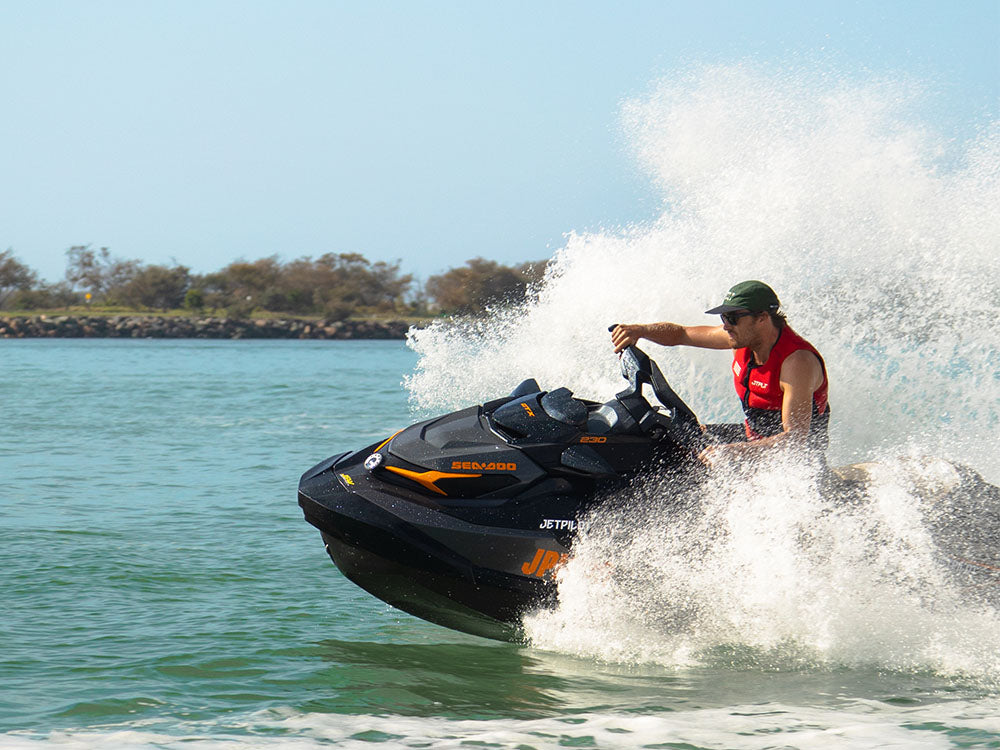
Jetski and high-speed riding
You want:
- Secure fit that doesn’t ride up on impact
- Comfort that doesn’t smash your ribs after 3 hours
- Practical storage that won’t fall out the first time you go over
Wakeboarding and skiing
You want:
- Freedom through shoulders and lats
- Low bulk where the handle passes close
- Comfort when you’re in and out of the water all session
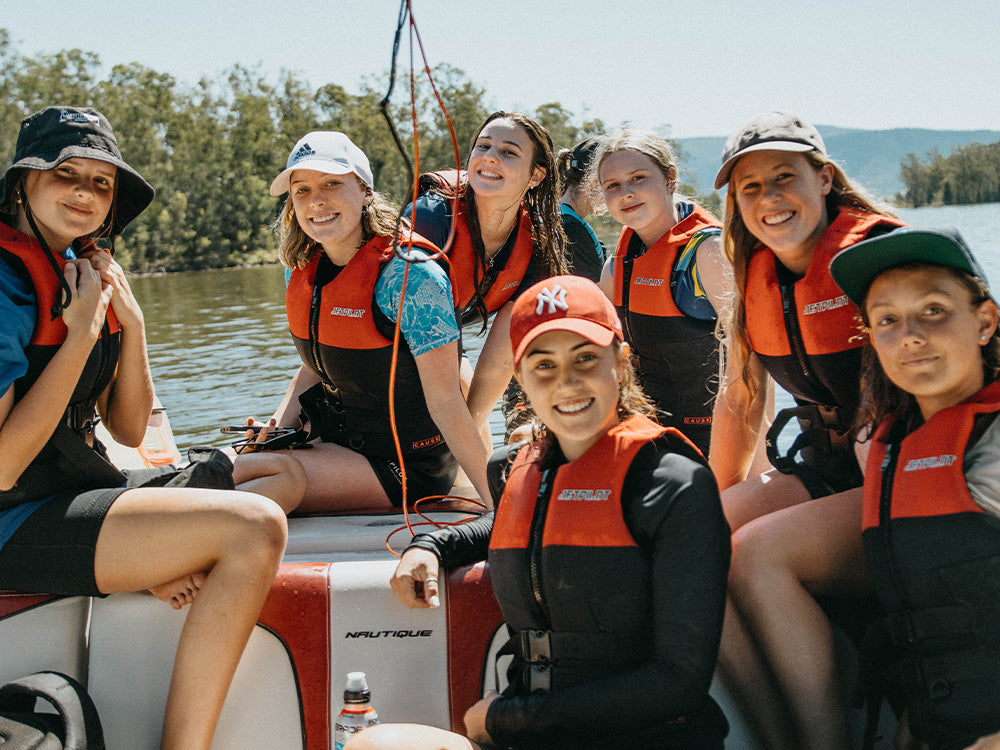
Family boat days
You want:
- High visibility for kids and anyone not confident
- Easy on/off so it actually stays on, not on the floor
- Cuts and sizing options that suit different bodies, not one generic shape

Common mistakes that get people hurt (and how to avoid them)
“It’s only a quick run”
Most incidents happen close to home, close to the ramp, close to the shoreline. Quick runs are where people get lazy.
Buying for style first
If you ride mixed water and mixed conditions, visibility matters. Bright shoulders look “uncool” until you’re scanning for someone in glare and chop.
Wrong size, loose fit
A loose vest can ride up, shift, and fail to do its job when you hit the water hard.
Assuming all “PFDs” are equal
They aren’t. The rating is the whole point. Match the level to your water type and activity.
The simple takeaway (so you can choose fast)
If you remember nothing else, remember this:
- L50 vs L50S is mainly about visibility. L50 is high-vis. L50S gives you more colour and style options.
- Level 50 and 50S are for active use, close to help. They don’t automatically roll you face-up.
- Match the rating to the water (smooth, partially smooth, open water) and the activity.
- Fit is safety. A badly fitting vest is a false sense of security.