



If your dog’s part of the crew, they’re not riding on vibes alone.
Boat days, jetski missions, beach launches, river runs, even just hanging off the swim platform while you’re sorting lines. Dogs slip, panic, tire out, and cop cold water shock just like people. The difference is they can’t tell you when they’re done.
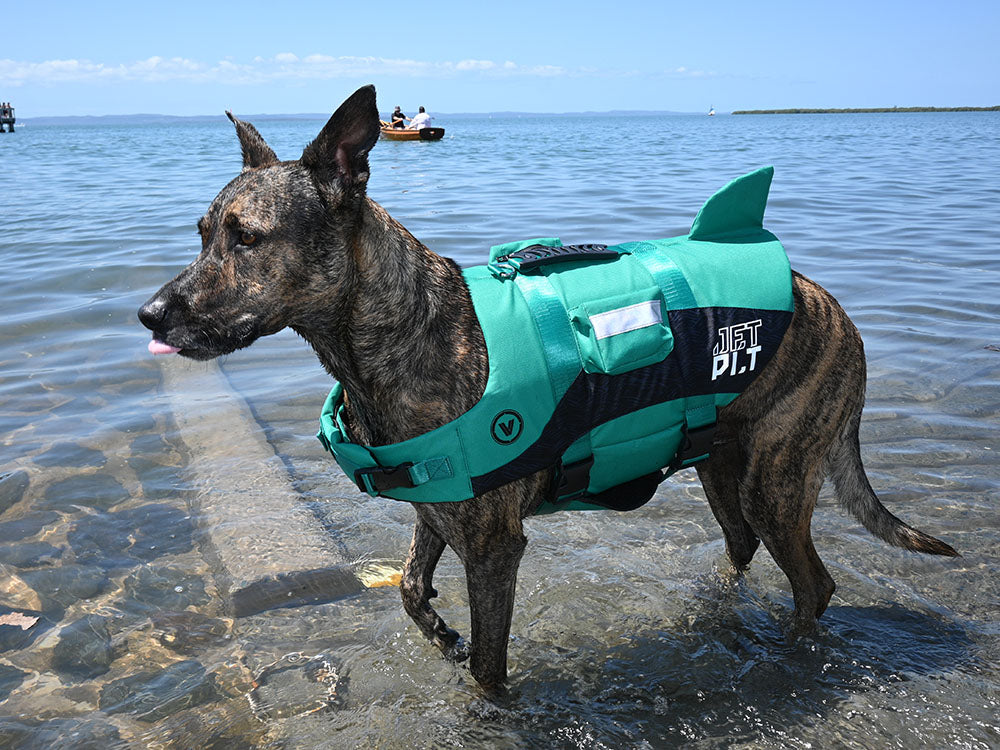
A dog PFD only works if it fits. Too loose and they can wriggle out. Too tight and they can’t breathe or swim properly. Get it right and you’ve got safer sessions, easier rescues, and a dog that stays confident on the water.
Do dogs legally need a life jacket in Australia?
There’s no blanket rule that dogs must wear a life jacket, but that doesn’t mean it’s smart to skip it.
If your dog goes overboard in chop, current, or a busy channel, you want an easy grab and guaranteed float. A properly fitted dog PFD with a solid handle turns a stressful moment into a quick lift back onto the boat.
The 3 measurements that decide your dog life jacket size
Forget guessing by breed. Measure your dog. It takes two minutes.
1) Chest (girth) is the main one
Measure around the widest part of the ribs, just behind the front legs.
If you only do one measurement, do this one.
2) Neck
Measure where the collar sits, at the base of the neck. Snug, not choking.
3) Back length
Measure from between the shoulder blades to the base of the tail.
Pro tip for tradies
Use a soft tape measure. No tape measure? Use a bit of rope, mark it, then measure that against a ruler.

The simple sizing process that actually works
Step 1: Measure dry, standing, relaxed
Don’t measure mid zoomies. Get them standing square. Treat in hand.
Step 2: Match chest first, then neck and length
Chest fit keeps the jacket from sliding or twisting. Neck and length help dial the comfort and stability.
Step 3: If you’re between sizes, don’t gamble
- Between sizes and your dog is still growing or bulking up? Size up.
- Between sizes and you want a tighter performance fit for swimming? Size down, but only if breathing and shoulder movement are still clean.
Jetpilot dog life jacket size guide
Use this as a starting point, then confirm the fit on your dog.
| Size | Length | Weight | Neck | Chest |
| XS | 20cm | 5 - 7kg | 28 - 35cm | 24 - 28cm |
| S | 30cm | 7 - 10kg | 43 - 52cm | 40 - 51cm |
| M | 35cm | 10 - 20kg | 43 - 55cm | 52 - 68cm |
| L | 45cm | 20 - 50kg | 53 - 65cm | 57 - 78cm |
| XL | 50cm | 50 - 60kg | 65 - 80cm | 70 - 95cm |
How a dog PFD should fit (the no-BS checklist)
Put it on, buckle it, adjust it, then run these checks.
Check 1: Two-finger rule
You should be able to slide two fingers under straps. Not more. Not less.
Check 2: Shoulder freedom
Your dog should be able to walk and “swim air” without the jacket rubbing under the armpits or locking the shoulders.
Check 3: No twist, no ride-up
If the jacket twists around the body when they move, it’s too loose or the wrong shape.
Check 4: The lift test
Grab the top handle and gently lift just enough to take some weight.
- If the dog slips forward, the chest is too loose.
- If the dog looks uncomfortable or the jacket cuts in, you’ve overtightened or sized wrong.
This is the test that matters when you’re hauling them back onto a boat or board.

What makes the best dog life jacket in Australia?
You’re not shopping for cute. You’re shopping for control, float, and visibility in real Aussie water.
High visibility
Sun glare, chop, tannin-stained rivers, late arvo light. Visibility keeps your dog in sight.
Strong rescue handle
A proper handle is non-negotiable. If your dog goes in, you want a clean grab that doesn’t rely on a collar or their neck.
Secure adjustment points
Look for multiple adjustment zones so you can lock it in across the neck, chest, and belly.
Comfortable inner feel
Salt, sand, wet fur, hot deck. If it chafes, your dog will hate it and fight you next time.
Smart coverage
You want buoyancy that supports the body without turning the jacket into a sloppy cape. Better balance helps keep their posture stable in the water.

Dog life jacket sizing mistakes we see all the time
Buying based on weight only
Weight is helpful, but chest fit decides if they stay in it.
Leaving it loose because “they hate tight gear”
Loose gear is how dogs slip out when lifted. A PFD should feel snug, not restrictive.
Ignoring breed's body shape
- Deep-chested dogs can need more chest adjustment.
- Long-bodied dogs may need a better length match.
- Short-nose breeds can struggle sooner in water and may benefit from extra stability and a secure chest fit.
Not practising before the big day
Don’t make the boat ramp the first test.
Do a short session in calm water first, then adjust.
How to size for different water days
Jetski and rough play days
Your dog is dealing with spray, turbulence, and sudden movement.
- Prioritise a locked-in chest fit.
- Handle strength matters.
- Visibility matters, because everything moves fast.
Boat and fishing missions
Your dog will be on deck, climbing, sitting, shifting weight.
- Comfort matters for long sessions.
- Fit still needs to be secure for a fast lift if they slip.
Beach and river runs
Current and cold water fatigue dogs quickly.
- Fit and buoyancy matter more than “my dog can swim”.

Getting your dog used to wearing a PFD
Keep it simple:
- Put it on at home for a few minutes.
- Reward calm.
- Short water intro in a controlled spot.
- Build up time.
If your dog only ever wears it right before chaos, they’ll associate it with stress.
Next steps
If you want your dog sorted for mixed weekend use, do this in order:
- Measure chest, neck, length
- Match size by chest first
- Fit test, lift test, comfort check
- Water test in calm conditions
- Lock in your straps and go ride