


If you ride a jet ski in Australia, you’ll pull up on sand one day, tuck behind a rocky point the next, then end up near reefy ground when the fishing’s on. One anchor rarely nails every bottom type, so the smart move is matching the anchor style to where you actually stop.
This guide breaks down sand vs rock vs reef anchoring, plus the parts your PWC anchor kit needs so your ski stays where you left it.
Quick pick: which jet ski anchor suits your bottom type?
Sand or mud (sandbars, bays, estuaries):
Go a fluke anchor or a plough-style sand scoop.
Rocky bottom (dams, snaggy ground, mixed rubble):
A folding/grapnel style can work in some conditions, but snag risk is real.
Reef or coral:
Use a reef pick only for short stops and only when you’re staying close. Avoid damaging coral and sensitive seabed whenever you can.
Beach stop (tether to shore):
A screw-in stake beach anchor is quick and clean on sand for hop-off stops.

Sand anchors: the go-to for most Aussie jet ski weekends
Sand is where you get the best holding, the easiest resets, and the least drama retrieving gear.
Fluke anchors (classic sand and mud holding)
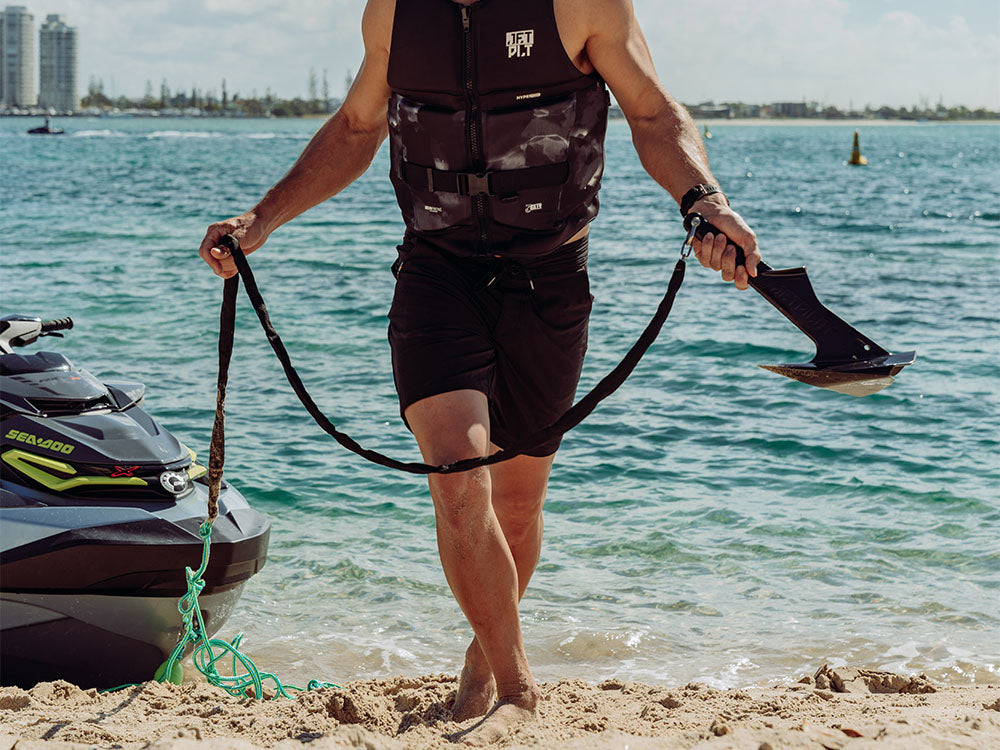
Fluke anchors are designed to dig in and hold on soft bottoms. Jetpilot’s Lightweight Fluke Anchor is a fluke style anchor built for PWC use, with a thick vinyl coating to help protect your ski and 7.6 m of marine grade rope included.
When a fluke is a strong pick
- Sandbars and sheltered bays
- Estuaries and rivers with sandy or muddy bottom
- Swim stops where you want the ski staying put while you keep eyes on the crew
Where a fluke can let you down
- Heavy weed beds
- Rubble and rock where it can struggle to set cleanly
Plough anchors (sand scoop style, more bite and stability)
Plough-style anchors are built to dig and hold on soft bottoms with a wider scoop profile. Jetpilot’s Plough Anchor is a complete system with a 1 kg nylon anchor with a lead self-locating tip, and the whole system weight is listed at 2.25 kg for stable anchoring.
When a plough anchor is a strong pick
- When you want a bit more bite and confidence on sand and mud
- When wind picks up and you need the ski to stop wandering

Rock anchoring: what actually works on a PWC
Rock is where people lose anchors. If you’re anchoring around rock, keep it practical and accept that no option is perfect.
What helps most in rocky ground
- Short stops
- Staying close
- Rigging in a way that reduces snag risk
- Having a plan to retrieve without yanking your ski around
If your usual spots are freshwater dams and snaggy ground, some riders also use a simple weight-style approach to “hold position” in shallow conditions, but it is not a true anchor replacement when wind and current get serious.
Reef anchoring: keep it short, keep it controlled
Reef and coral are not the place for set-and-forget anchoring. If you must anchor near reef, treat it as a brief stop, stay close, and pick sandy patches wherever possible.

Jetpilot anchors: how to choose between Jetpilot plough and Jetpilot fluke
Jetpilot’s PWC anchor range includes sand anchors, plough anchors, and fluke anchors.
Here’s the clean way to choose between the two common do-it-all options:
Choose a Jetpilot fluke anchor if you want
- Lightweight, compact storage
- Reliable sand and mud holding for normal weekend stops
- A setup that protects your ski’s finish (vinyl coating) and comes with rope ready to go.
Choose a Jetpilot plough anchor if you want
- A heavier, more planted feel on sand and mud
- A sand scoop style design with a self-locating lead tip for easier setting.

What should be in a proper PWC anchor kit?
A solid pwc anchor kit is more than “anchor plus rope”. Look for:
- Anchor style that matches your usual bottom
- Rope length that suits your typical depth
- A float so you can spot your line
- A storage bag that drains
- Protection that stops hardware rubbing or scratching your ski