


Long weekend done right? Your gear’s probably copping it.
Salt dried into everything. Sand where it shouldn’t be. Wet gear thrown in the back of the car with every intention of “sorting it later.”
Here’s the reality. The difference between gear lasting one season or five isn’t luck. It’s what you do in the first few minutes after you get home.
This is the no-BS, real world guide on how to clean water sports gear properly. The same way riders who actually care about their kit do it.
Why Post-Ride Care Matters More Than You Think
Every time you hit the water, your gear takes a beating from four things:
- Salt water
- Chlorine
- UV exposure
- Sand
Individually, they’re manageable. Together, they slowly break everything down, stitching weakens, neoprene stiffens, colours fade, zips jam.
And it doesn’t take long.
Skip care for a few weekends and you’ll feel it straight away. That wetsuit that used to flex easy? Now it’s stiff. That life jacket? Starting to smell, fade, lose shape.
Here’s the simple math:
- A $300 wetsuit that lasts 5 years = $60/year
- The same wetsuit lasting 1 year = $300/year
The difference? About 10 minutes of rinsing and drying.
This isn’t about being precious. It’s about not replacing gear you don’t have to.

How to Care for Your Wetsuit (Neoprene)
If there’s one piece of gear worth looking after, it’s your wetsuit. Neoprene is tough, but only if you treat it right.
Step 1: Rinse it ASAP (inside and out)
Freshwater rinse within 30 minutes of finishing your session. Not just the outside, flip it and rinse the inside too.
Salt left sitting in neoprene is what causes stiffness and breakdown.
Step 2: Use proper wetsuit wash (every 3–5 uses)
Skip the dishwashing liquid. It strips oils and damages the material.
Use a wetsuit-specific wash designed for neoprene. It removes salt, bacteria, and odour without wrecking the fabric.
Step 3: Hang it properly
No wire hangers. Ever.
Use a wide hanger or fold it over a rail. Thin hangers stretch the shoulders and ruin the fit over time.
Step 4: Dry it in the shade
Sun might feel like the fastest option, but it’s also the worst one.
UV breaks down neoprene faster than salt. Always dry your wetsuit in a shaded, well-ventilated spot.
Step 5: Store it right
Once dry, store it:
- Flat or loosely hanging
- In a cool, dry place
- Never crammed into a bag or car boot
Common mistakes to avoid
- Leaving it in the car overnight
- Hanging it in direct sun
- Throwing it in the washing machine
Jetpilot wetsuits are built to last, but like anything, they’ll only go the distance if you look after them.
→ See the full Jetpilot wetsuit range
 (Image credit - CurveSurf.com.au)
Life Jacket & PFD Care
Your PFD isn’t just gear — it’s safety equipment. Looking after it properly isn’t optional.
Step 1: Rinse after every saltwater use
Quick freshwater rinse every time. Salt builds up fast and eats away at fabric and stitching.
Step 2: Open everything up
Unzip all zips. Undo buckles. Let water run through the inside.
This is where salt and sand hide.
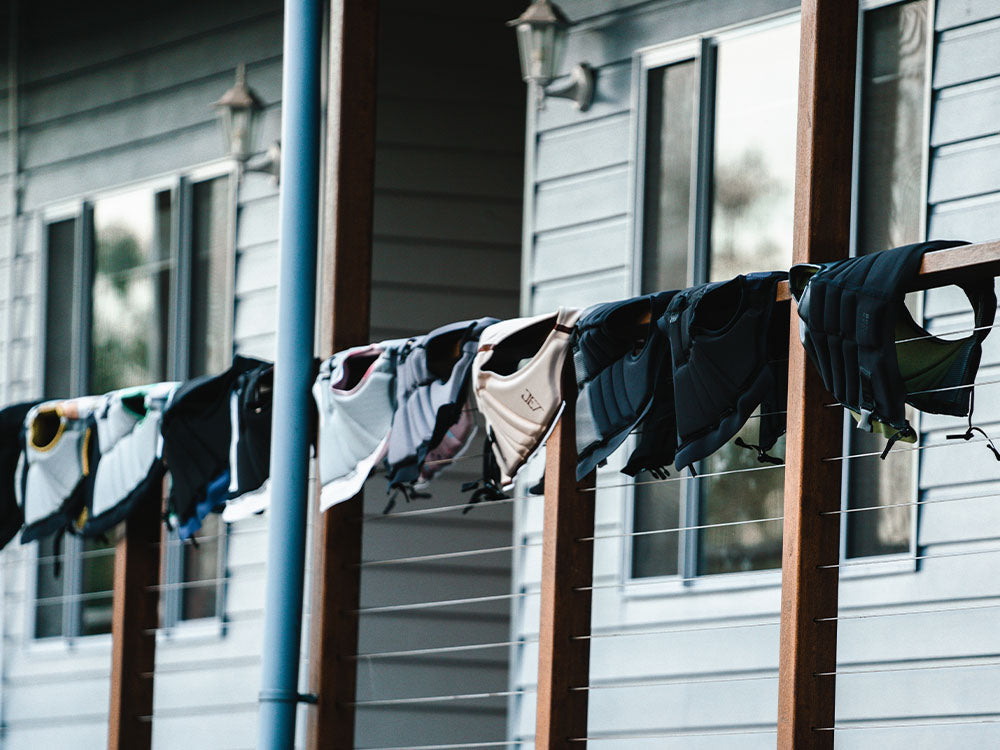
Step 3: Dry it completely
Mould is the number one killer of life jackets.
Hang it up and let it fully dry before storing. No shortcuts.
Step 4: Inspect regularly
Once a month during season, check:
- Buckles
- Zips
- Stitching
- Foam condition
If something looks off, don’t ignore it.
Step 5: Store it properly
- Hang it or lay it flat
- Don’t compress it long-term
- Keep it dry and ventilated
When to replace your PFD
- Faded or brittle fabric
- Stiff or compressed foam
- Broken buckles or zips
- Fails a simple float test
In Australia, PFDs must meet AS 4758 standards. A damaged life jacket may not comply — and more importantly, may not perform when you need it.
Jetpilot’s PFD range — from Cause to Venture, Pro-Tech and Vault — is built for serious use. But even the best gear needs proper care.
→ Explore Jetpilot life jackets

Boardshorts, Rashies & Apparel
This is the easy stuff — but it still gets ruined all the time.
After every session
Rinse in cold fresh water. Get rid of salt, chlorine, and sunscreen build-up.
Washing
- Cold machine wash
- Gentle cycle
- No fabric softener (breaks down stretch fabrics)
Drying
Hang dry only. No tumble dryers.
Heat kills elasticity and shortens lifespan fast.

Know when to replace
UPF protection fades over time. Rashies should be replaced every 1–2 seasons depending on use.
If it’s stretched, faded, or thin — it’s not doing its job anymore.
→ Shop Jetpilot boardshorts & rashies
Accessories — Dry Bags, Water Shoes, Gloves, Goggles
The small stuff gets ignored… and usually smells the worst because of it.
Dry bags
- Rinse after use
- Dry fully open
- Never store sealed while wet
Water shoes
- Remove insoles
- Rinse inside and out
- Air dry completely
Gloves
- Rinse inside and out
- Lay flat to dry
Goggles
- Freshwater rinse only
- Store in a case to avoid scratches
Tow ropes
- Rinse after salt exposure
- Coil loosely (not tight knots)
- Check monthly for fraying
Take care of the small gear and it won’t let you down mid-session.
→ Explore Jetpilot accessories
Build Your Rinse Station — The 5-Minute Post-Ride Setup
This is where most people fall off.
Not because it’s hard, because they don’t have a system.
Set this up once, and you’ll never skip it again.
What you need
- Large tub or bin
- Garden hose
- Wetsuit wash
- Wide hangers
- Shaded drying area
The routine
- Fill the tub with fresh water
- Drop your gear in as you unload
- Let it soak while you sort everything else
- Pull it out, quick rinse
- Hang it up in the shade
Done.
Five minutes. That’s it.

Pro tip
Keep a dedicated rinse kit in your car or trailer:
- Small bottle of wash
- Spare hanger
- Rope for hanging
No excuses, even after a long day.
Bonus: give your ski or boat a quick deck rinse before trailering. Salt sitting on fittings shortens their life just as fast as gear.
Seasonal Storage — End of Season Deep Clean
When the season winds down, don’t just throw everything in a corner and forget about it.
That’s how gear dies in the off-season.
Do a full clean
- Proper wash for wetsuits
- Full rinse for everything else
- Let it dry completely
Condition your wetsuit
Use neoprene conditioner to keep it flexible and prevent cracking over time.
Check your PFD
Do a simple float test:
- Submerge it in water
- Make sure it still provides proper buoyancy
If it doesn’t, it’s time to replace it.
Store it properly
- Breathable storage (not plastic bags)
- Cool, dry environment
- Hanging or laid flat
Set a reminder
Two weeks before your next season starts, check everything again.
No last-minute surprises. No gear failures on day one.

Ready for the Next Session
Your gear works hard every time you hit the water.
Treat it right, and it’ll return the favour with better performance, longer lifespan, and no surprises when it matters.
Skip the care, and you’ll be replacing things way sooner than you should.
Simple as that.